
Direct answer
What is the direct answer?
E-commerce SEO for an online store in Sri Lanka should make valuable categories and products crawlable, understandable, fast, and useful to buyers. It requires consistent product data, original category guidance, controlled filter URLs, Product structured data, deliberate internal linking, accurate availability, and measurement from organic landing pages through completed profitable orders.
What should you know first?
- Prioritise categories and products with search demand, margin, and reliable stock.
- Control filter and sort URLs so they do not create crawlable duplication.
- Keep price, availability, variants, canonicals, and Product schema consistent.
- Measure organic revenue after cancellations and returns, not sessions alone.
Which e-commerce pages should target search demand?
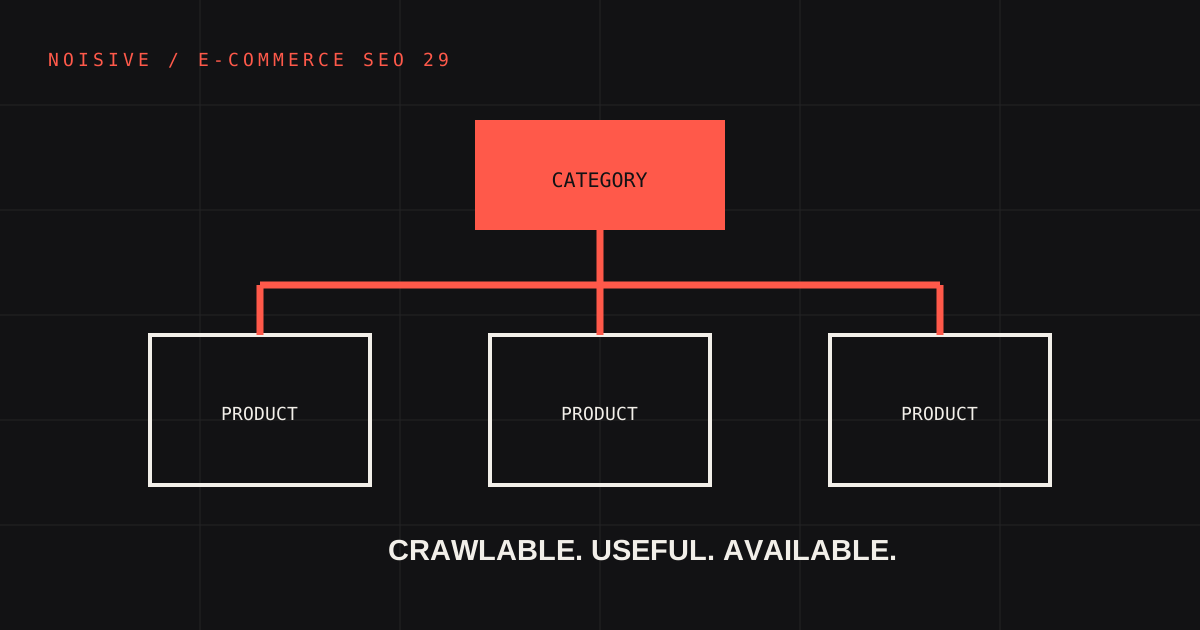
Use category pages for broad product needs, product pages for specific items, and curated guides for questions that require explanation. Each page type should satisfy a distinct intent rather than compete with another page.
Map search terms to the most useful existing destination before creating new pages. A category should include a clear title, useful introduction, appropriate products, decision support, and internal links without pushing the product grid too far down.
Product descriptions should contain accurate distinguishing information from the merchant, not duplicated supplier copy alone.
How should common store URLs be managed?
| URL type | Typical value | SEO treatment | Main risk |
|---|---|---|---|
| Core category | High | Index and optimise | Thin generic copy |
| Product detail | High when available | Index canonical product | Duplicate variants |
| Useful subcategory | Selective | Index with unique demand | Cannibalisation |
| Sort or session URL | None | Prevent indexation | Duplicate pages |
| Filtered combination | Variable | Control by demand and quality | Crawl explosion |
Which e-commerce SEO measurements matter?
- →Organic revenue, contribution, orders, cancellations, and returns by landing page
- →Search clicks and impressions for priority categories and available products
- →Indexed page count compared with the intended indexable inventory
- →Rich-result validity, price and availability consistency, and merchant feed issues
- →Mobile Core Web Vitals and conversion for organic shopping journeys
FAQ
What do businesses ask most often?
How long does e-commerce SEO take in Sri Lanka?
Technical fixes may be processed quickly, but category authority, product coverage, links, and commercial results normally develop over months in competitive markets.
Does every product need a unique description?
Every important product page should add accurate useful value beyond copied manufacturer text. The needed depth depends on complexity, similarity, and buyer questions.
Should filtered category pages be indexed?
Only selected filters with durable demand, sufficient products, stable URLs, and unique value should be indexable. Most combinations should not compete in search.
Which primary sources support this guide?
Which Noisive resources should you explore next?
Need a clear build plan?
How can your next website decision become measurable?
Noisive designs and develops websites, web applications, e-commerce experiences, and technical SEO systems for growth-focused teams.
Start a project