
Direct answer
What is the direct answer?
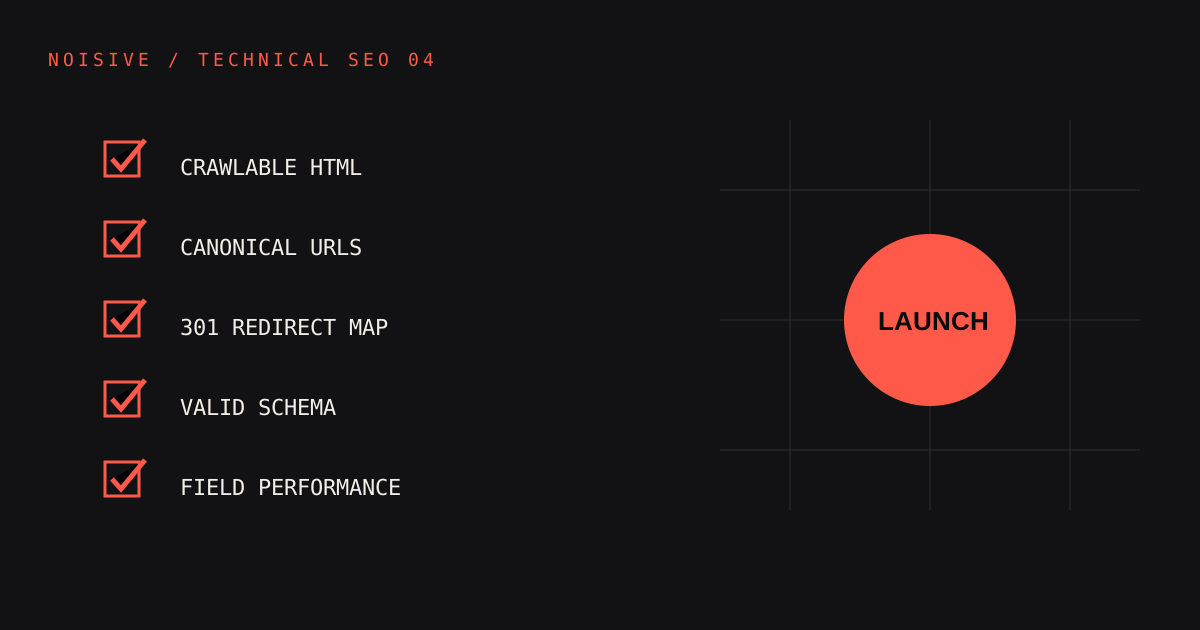
A technical SEO launch check confirms that search engines can discover, render, understand, index, and measure the correct version of every important page without losing signals from the old site.
What should you know first?
- Test crawlability and canonical URLs in the rendered production build.
- Map every valuable old URL to the closest new URL with a server-side 301 redirect.
- Validate metadata, schema, status codes, XML sitemaps, and real analytics events.
- Measure LCP, INP, and CLS with field data after launch, not only lab tools before launch.
Before development is complete
- →Create one intent and primary entity for every indexable page.
- →Define canonical URL rules for trailing slashes, parameters, HTTP, and host names.
- →Keep important copy, headings, links, and structured data available in rendered HTML.
- →Prepare a redirect map from analytics, Search Console, backlinks, and the old sitemap.
- →Set measurable budgets for JavaScript, images, fonts, and third-party scripts.
Launch-day verification
| Check | Pass condition | Tool or evidence |
|---|---|---|
| Status | Key pages return 200; moved pages return one-hop 301 | Crawler and server headers |
| Indexing | No accidental noindex or production block | robots.txt and URL inspection |
| Canonical | Self-referencing, absolute, preferred URL | Rendered HTML |
| Sitemap | Only canonical 200 URLs with honest dates | XML validation |
| Schema | Matches visible content with stable IDs | Schema validator and rich results test |
| Tracking | Forms, calls, purchases, and errors recorded | Live analytics debug view |
Core Web Vitals targets
At the 75th percentile of real visits, target LCP at or below 2.5 seconds, INP below 200 milliseconds, and CLS at or below 0.1 on both mobile and desktop.
Improve the largest image with correct sizing, priority loading, compression, and a stable aspect ratio. Reduce interaction delay by limiting client-side JavaScript and splitting long tasks. Prevent layout shifts by reserving space for images, embeds, banners, and font changes.
Lab scores are useful during development, but field data shows real devices and networks. Review Search Console and real-user monitoring after enough traffic is available.
The first 30 days after launch
- →Inspect submitted and indexed counts by page type.
- →Review 404s, redirect chains, soft 404s, and unexpected canonical choices.
- →Compare traffic and conversions against the same weekdays before launch.
- →Check search snippets for wrong titles or weak descriptions.
- →Update internal links so they point directly to final URLs.
FAQ
What do businesses ask most often?
When should technical SEO start in a redesign?
It should start during discovery, before the sitemap and platform are fixed. Late SEO work cannot fully repair lost content, weak architecture, or unsuitable technology.
Should every page be in the XML sitemap?
No. Include canonical, indexable, valuable URLs that return a successful status. Exclude redirects, errors, duplicate filters, and noindex pages.
How long should redirects stay active?
Keep important redirects for at least one year and preferably longer when old URLs still receive links or traffic.
Which primary sources support this guide?
Need a clear build plan?
How can your next website decision become measurable?
Noisive designs and develops websites, web applications, e-commerce experiences, and technical SEO systems for growth-focused teams.
Start a project