
Direct answer
What is the direct answer?
Shopify is often better for a Sri Lankan team that values managed hosting, a controlled platform, and simpler daily operations. WooCommerce is often better when the business needs deeper WordPress control, custom content, or unusual integrations. The right choice depends on supported local payments, complete fees, internal skills, catalogue complexity, and five-year operating cost.
What should you know first?
- Verify current Sri Lankan payment and settlement options on both platforms.
- Shopify reduces infrastructure ownership; WooCommerce increases control and responsibility.
- Compare apps, extensions, support, development, hosting, and transaction costs together.
- Choose for the operating team and required workflows, not feature-list length.
What is the main platform difference?
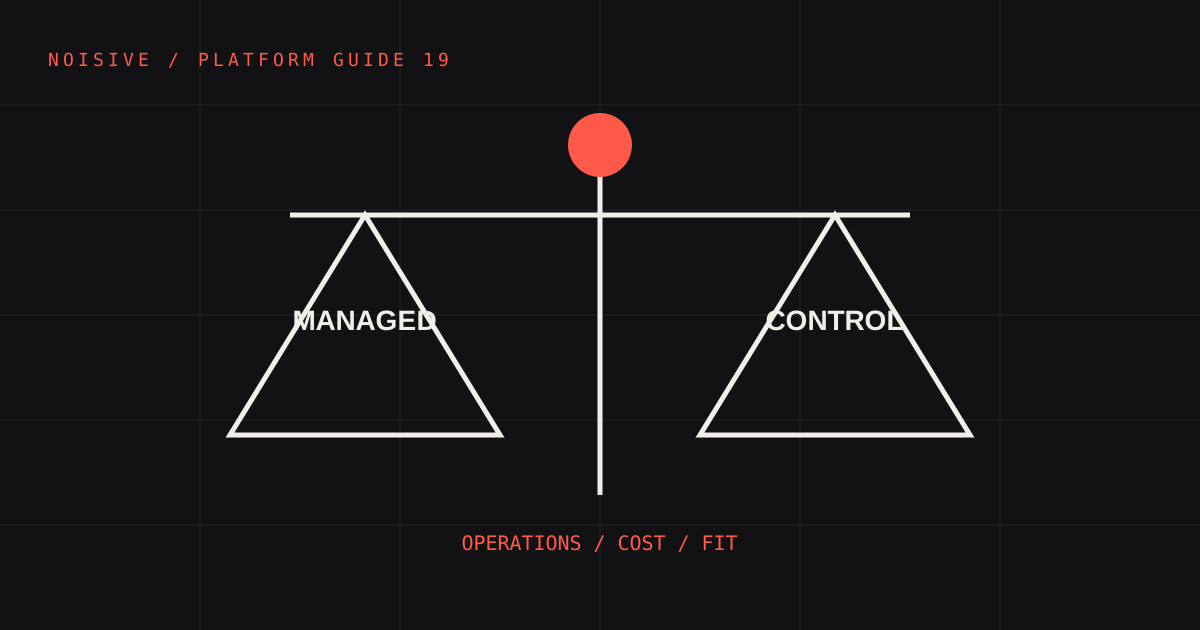
Shopify is a hosted commerce platform with subscription plans and managed core infrastructure. WooCommerce is an open-source commerce layer for WordPress, so the merchant chooses hosting and carries more responsibility for updates and operations.
Neither model is automatically cheaper. Shopify plans can include subscription, app, and transaction-related charges. WooCommerce core may be open source, but reliable hosting, premium extensions, engineering, security, and support create operating cost.
How do Shopify and WooCommerce compare?
| Decision area | Shopify | WooCommerce | Check in Sri Lanka |
|---|---|---|---|
| Hosting | Managed platform | Merchant-selected | Speed, support, and data location |
| Customisation | Platform and app constraints | Deep code and content control | Long-term engineering capacity |
| Payments | Provider and plan dependent | Gateway-extension dependent | Approval, fees, LKR, settlement |
| Maintenance | Core managed by Shopify | Site owner manages stack | Accountable support owner |
| Cost | Plan, apps, development, fees | Hosting, extensions, development | Five-year total cost |
Which platform fits each operating model?
- →Choose Shopify when a small team wants predictable core operations and standard commerce journeys.
- →Choose WooCommerce when editorial content and custom WordPress workflows are central.
- →Use a custom or headless approach only when measured needs justify extra complexity.
- →Prototype critical payment, stock, delivery, accounting, and refund workflows before commitment.
What should be verified before selecting either platform?
Confirm merchant approval, local and international payment methods, settlement currency, transaction and refund fees, delivery integrations, tax handling, stock sources, reporting, and ownership of customer data.
Shopify advises checking its current pricing pages because plan rates and fees vary. WooCommerce requirements also change with supported software versions. Treat official current documentation and written provider terms as the source, then test the complete Sri Lankan operating workflow.
FAQ
What do businesses ask most often?
Is Shopify available for Sri Lankan businesses?
The platform can be used, but payment providers, plan billing, currencies, and features vary by location. Verify the current setup required for your business before committing.
Is WooCommerce free?
The core plugin is open source, but a production store still needs hosting, design, development, security, backups, extensions, payment services, and ongoing support.
Can a store migrate from WooCommerce to Shopify?
Yes. Products, customers, orders, URLs, SEO signals, integrations, accounts, and reporting need a planned migration and careful validation.
Which primary sources support this guide?
Which Noisive resources should you explore next?
Need a clear build plan?
How can your next website decision become measurable?
Noisive designs and develops websites, web applications, e-commerce experiences, and technical SEO systems for growth-focused teams.
Start a project